Ubuntu Install Software
- Ubuntu Install Software Using Terminal
- Ubuntu Server Install
- Ubuntu Package Installer
- Ubuntu Install Software Terminal
Method 1: Snaps
Snaps are a fairly new way to package up applications and have them work across almost any major Linux distribution (like Arch, Linux Mint, Fedora and elementary OS).
Major app developers like Mozilla, Google and Microsoft have embraced the format because it's relatively easy to package and distribute software without the user having to worry about dependencies (basically, having to manually installing libraries required to use said software).
You can view thousands of Snap applications from the Snapcraft Store and install these with just a click or two. No license agreement pages, no multiple installation windows.
(My favorite go-to Snaps are Spotify, OBS Studio, Telegram, RetroArch and Discord.)
You can also enable the Snap Store on a wide variety of other Linux distros. The instructions are beneath every single app.
Jason EvangelhoTIP: If you're not using Ubuntu, you can learn how to enable Snap support in your distribution of choice at the bottom of every single app listing. For example, check out the instructions for Discord here.
Method 2: Ubuntu Software Center
Windows and macOS have their own built-in stores, and the same goes for Ubuntu. You'll find a ton of software in the Ubuntu Software center, and it's the same place you can uninstall your existing apps or check for updates.
And because the concept of Snaps was developed by Ubuntu's parent company Canonical, every piece of software you'll find in the Snap Store is also available right inside the Ubuntu Software center. Nice!
Spotify in the Ubuntu Software center
Jason EvangelhoAt the bottom of each app listing, you can also double-check the developer, app version, and whether or not it's coming from the Snap Store or directly from the Ubuntu Software center.
Similar to Snaps, installing anything here just requires the click of a button and entering your user password. And like Snaps, this software is automatically updated!
Method 3: PPAs (Personal Package Archives)
Sometimes the software you're seeking isn't available as a Snap or via the Ubuntu Software center. In situations like these, you may have to rely on 'PPAs' or Personal Package Archives. These are independent software repositories that aren't verified or maintained by the folks at Ubuntu. In other words, you'll need to trust the maintainer of this software source.
I run into this very situation a lot since I install Lutris (a gaming platform that lets you easily run titles like Battlefield 1 and thousands of other Windows games through Wine and DXVK) on every machine I own.
The websites for these software repositories (you know what's let's just call them sources) will frequently show you command line instructions for adding them to Ubuntu, and that's just a matter of copying and pasting those commands into Terminal.
Adding a PPA (in this case: Lutris)
Jason EvangelhoBut like everything else on Ubuntu, you can stick to a graphical solution.
Just hit your SUPER key (that's likely the Windows logo key on your keyboard) and type 'Software.' Click the icon that appears for 'Software & Updates.' This window will show you all the current software sources you've added to your OS. We're interested in the 'Other Software' tab. Browse over to that and click 'Add.'
Ubuntu will ask you for the 'Apt line' of the PPA you want to add.
So in the case of Lutris: deb http://ppa.launchpad.net/lutris-team/lutris/ubuntu disco main
Don't worry! Every single PPA (or software source) should have a dropdown window that lets you choose your exact version of Ubuntu, then it will fill in the appropriate code for you!
To illustrate how much faster this is via the command line, though, here are the same instructions for adding the Lutris PPA to Ubuntu:
- sudo add-apt-repository ppa:lutris-team/lutris This means 'add the PPA / software source to Ubuntu'
- sudo apt-get update This means 'tell Ubuntu I've added a new source and check for the software that's available there'
- sudo apt-get install lutris And this simply installs the app
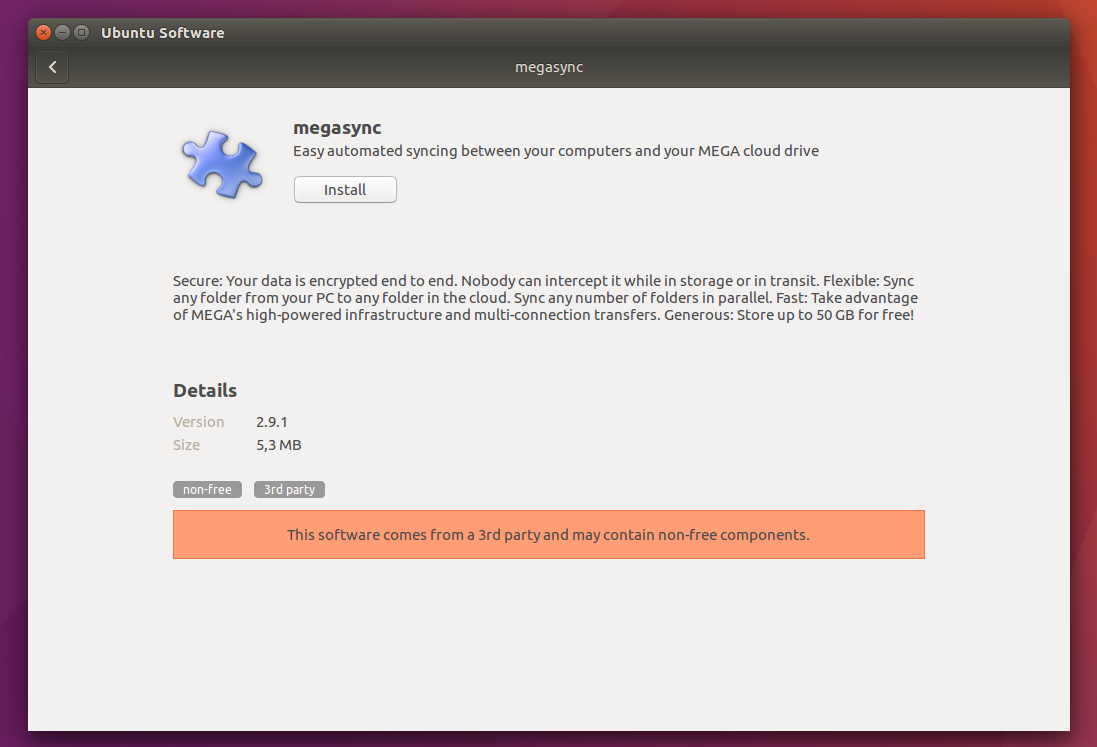
Whether you use the GUI way or the command line, any software you've added to Ubuntu via a PPA will get automatically updated, right alongside your software from the Snap Store or Ubuntu Software center!
Bonus Tip: Harness The Command Line
Installing multiple apps in batch with the Command Line on Ubuntu 18.04 LTS
Jason EvangelhoWe're years removed from relying on the command line to do stuff in Linux, but it's an option that is consistently faster once you've embraced it. For example, if I know the exact names of the apps I want to install in a brand new installation of Ubuntu, I can install all of them with a single command. For example, I want to load up VLC (for video playback), Audacity (for recording my podcast), Telegram and Steam. Here's the command:
- sudo apt install vlc audacity telegram-desktop steam
I enter my password, type 'Y' or just hit the Enter key at the 'Y/n' prompt (the capital letter is the default selection in the terminal), and Ubuntu installs all four apps in one batch. No further input required from you.
There are additional ways to install software (such as Flatpak, AppImage and .deb files), but the methods listed above are the most common and most user-friendly. Hopefully this helps get you started smoothly on your Ubuntu journey!
More Ubuntu Guides:
Do you love Linux and the community creating it? Check out my brand new podcast Linux For Everyone!
Ubuntu has a lot of GUI-based methods for installing applications, but they take some time to search and find. Since the keyboard is usually faster than the mouse, managing your software via the command-line can be a real time-saver.
APT
Linux manages software through packages, individual units of software that contain user interfaces, modules, and libraries. Most applications link several co-dependent packages together, and still others allow you to choose which packages to install and which to leave out at your own discretion. This can get confusing, so there’s a package manager at your disposal to help
Each Linux distribution has its own package management system. For our own near and dear Ubuntu, it’s the Advanced Packaging Tool. It has a family of commands that allows you to add repositories; search for, install, and remove packages; and even simulate upgrades and such. The commands are fairly easy to remember and use, so you’ll be managing your system’s software in no time at all!
APT requires super-user permissions, as it deals with core aspects of the system, so in Ubuntu you’ll need to preface most commands with “sudo.”
Searching for Packages
The command to search for software is:
apt-cache search [search term 1] [search term 2] … [search term n]
Replace [search terms] but don’t use brackets. You’ll get an output like this:
You can search for terms in the description of packages, say for a solitaire game, or by package name. Some searches may yield a ton of results, so you can scroll through the list with the following command:
apt-cache search [search terms] less
There’s a pipe in the middle of that command (it shares a key with ). The less command will allow you to scroll through your list with the arrow keys, page up/down keys, and space, b, and enter. Hit q to exit the list and go back to the prompt.
Adding Repositories
You can find more software in repositories found online. Take, for instance, Ubuntu Tweak, a program that lets you change some hidden or otherwise difficult-to-change settings for your system. It’s hosted at another repository. If you add the repository instead of downloading and installing just the package, the system will notify you of updates and automatically keep it up-to-date for you. You can manually add and change repositories by editing APT’s sources file:
sudo nano /etc/apt/sources.list
But Ubuntu 9.10 Karmic Koala changed that. There’s an easier way!
sudo add-apt-repository [repository name here]
Let’s look at Ubuntu Tweak’s repo to see what it’ll look like in practice:
sudo add-apt-repository ppa:tualatrix/ppa
Voila!
Updating Sources
After adding repositories, you have to update your package list.
sudo apt-get update
That will update the package lists from all repositories in one go. Remember to do this after every added repository!
Installation
Now that you’ve added your software repo and updated your package list, and found the package name you need, you can install it.
sudo apt-get install [package name 1] [package name 2] … [package name n]
This will download and install all of the packages listed. If there are dependencies – other prerequisite packages – they will also be installed. Sometimes you’ll also see a list of recommended but optional packages to go along with your selection. Sometimes, you’ll also see a confirmation prompt, though not always.
Often, you’ll see a core package with other linked packages, so installing this one will automatically install the dependencies and sometimes its associated packages, too.
Removing Packages
If you want to get rid of a program, you can uninstall its associated packages.
sudo apt-get remove [package name 1] [package name 2] … [package name n]
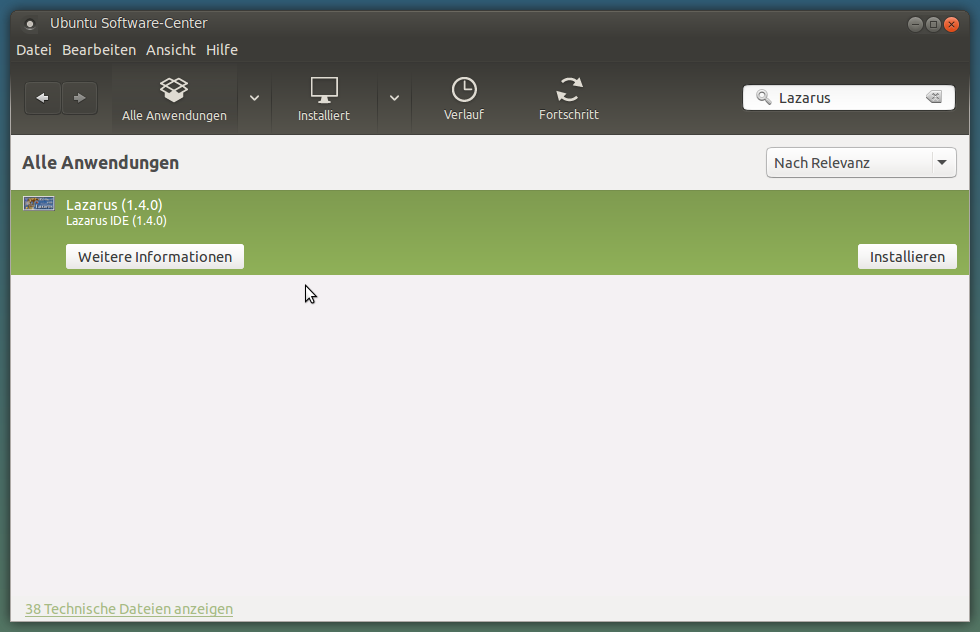
If you want to get rid of the configuration files and associated directories (usually in the user’s home directory), you’ll want to add the purge option:
sudo apt-get remove –purge [package name 1] [package name 2] … [package name n]
There are two dashes there. This will come in handy if a program isn’t working properly. By purging upon removal, you’ll can have a “clean” install.
Most of the time, you can just choose the core package and the associated ones will be removed as well. If it doesn’t, you can use the following command:
sudo apt-get autoremove
This will automatically remove any packages that aren’t used or associated with any installed program. For example, if you got rid of a core package, autoremove will get rid of it’s associated packages and any dependencies it had, so long as no other program is using them. It’s a great way to clean up any unused libraries and packages you don’t need.
Upgrading Software
So, what if your packages need upgrading? You can upgrade individual programs with the following command:
sudo apt-get upgrade [package name 1] [package name 2] … [package name n]
Or, you can upgrade all packages by having no further arguments:
sudo apt-get upgrade
This will tell you how many and which packages need updating and will ask for a confirmation before it continues.
Remember, you may need to update first. Upgrade will replace older versions of programs with their newer versions. This is a replacement process; the same package name is required and the older version is replaced with a newer version. No completely new packages are installed and no packages are uninstalled.
Some programs don’t quite work that way. They require a package with a slightly different name to be removed and a new one with a different name to be installed. Sometimes a program’s new version has a new required package. In these cases, you’ll need to use dist-upgrade.
sudo apt-get dist-upgrade [package name 1] [package name 2] … [package name n]
sudo apt-get dist-upgrade
Now, all of the dependencies will be satisfied no matter what. If you aren’t into micro-managing your packages, then this is the command you’re going to use.
If you only want to see which packages will be upgraded if you were to hypothetically run the command, you can simulate an upgrade with the –s option.
sudo apt-get –s upgrade
This is really useful if you aren’t sure if upgrading one package will mess up other programs, which happens occasionally with things like PHP and mail server libraries.
Cleaning
When you download packages, Ubuntu caches them in case it needs to refer to them further. You can delete this cache and get back some hard drive space with the following command:
sudo apt-get clean
If you want to get rid of your cache, but save the newest versions of what packages you have, then use this instead:
sudo apt-get autoclean
This will get rid of the older versions which are pretty much useless, but still leave you with a cache.
Checking What’s Installed
You can see a list of all your installed packages with dpkg.
sudo dpkg –list
You can also use less to scroll through this list.
sudo dpkg –list less
You can also search through the list with the grep command.
dpkg –list grep [search term]
Ubuntu Install Software Using Terminal
If something is installed, you’ll see a package name and a description.
You can also search through a more compact method:
dpkg –l ‘search term’
May 03, 2019 Free Memory Card Boot (FMCB) v1.95 along with v0.97 of the Installer has been released by developer sp193, FMCB & Installer has been updated and built with the latest PS2SDK and a number of changes as outlined in the changeslogs that developer Aldostools was kind enough to post for us and alert us of this latest release. Buy 🛒 Memory Card FreeMcBoot for Playstation 2. Buy 🛒 Network Adapter HDD SATA/IDE (No RJ-45) 25,99$ Buy 🛒 Modchip Modbo 5.0 for Playstation 10,99$. Feb 09, 2016 PS2 Free Memory Card Boot Installer v0.97 (FMCB v1.95). If you have one of the Sony PS2 Memory Card Adaptors, you can run software on windows that can create the Free McBoot card for you. This was how I made my card and for several other friends. I bought the adaptor for about $5 off ebay. Staff Member. May 11, 2011 Step 8: Select FREEMCBOOT.ELF on the next screen and the installer will start. Install FMCB from there. Installation Method 6: Finding someone (In your region) that has FMCB already No things needed here, if you happen to find someone that has FMCB, than they can install it for you. Devin, wolffangalchemist and me can do installs for free. 
That option is a lowercase letter L, and your search term must be inside single quotes. You can use wildcard characters to search better as well.
Easter Egg
Ubuntu Server Install
APT has an interesting easter egg.
sudo apt-get moo
Enjoy your super cow powers!
Gran turismo 4 bios. GRAN TURISMO 4 iso for Playstation 2 (PS2) and play GRAN TURISMO 4 on your devices windows pc, mac,ios and android!
Being able to manage packages and installed software via command-line can save you some time. Ubuntu’s Software Updater is often laggy on my system and it can really be a pain to have to add software repos and install packages through the Software Center, especially if you know the package names already. It’s also great for managing your system remotely via SSH. You don’t need to have a GUI running at all or deal with VNC.
Ubuntu Package Installer
There are a lot of things to learn when getting comfortable with the command-line, so you may want to check out The Beginner’s Guide to Nano, the Linux Command-Line Text Editor. There’s more to come!
READ NEXTUbuntu Install Software Terminal
- › How to Create a Local Account While Setting Up Windows 10
- › What Is Windows 10X, and How Is It Different?
- › How to Delete Apps on an iPhone or iPad With iOS 13
- › How to Merge Multiple Google Drive and Google Photos Accounts
- › How to Edit Any Web Page in Chrome (or Any Browser)